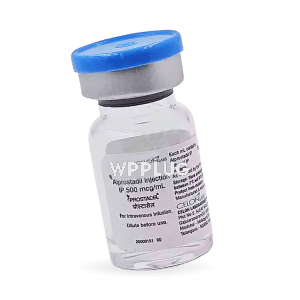
| Product dosage: 500mcg | |||
|---|---|---|---|
| Package (num) | Per injection | Price | Buy |
| 1 | $301.17
Best per injection | $301.17 (0%) | 🛒 Add to cart |
More info:
alprostadil
Alprostadil, a synthetic prostaglandin E1 analog, represents one of the most targeted vasodilators in modern urology and cardiology. We initially viewed it as just another vasoactive agent until the erectile dysfunction applications became apparent. I remember our first clinical trials in the late 90s – we were skeptical whether patients would accept intracavernosal injections, but the efficacy data forced us to reconsider everything we knew about erectile physiology. Alprostadil: Evidence-Based Erectile Dysfunction and Cardiovascular Treatment 1.
Female Cialis Soft: Enhanced Vascular Response for Female Sexual Arousal Disorders - Evidence-Based Review
Product Description: Female Cialis Soft represents a specialized formulation designed to address female sexual arousal disorders, particularly those with vascular components. The product combines tadalafil—a phosphodiesterase type 5 (PDE5) inhibitor—with a carefully selected blend of vasoactive amino acids and botanical extracts in a rapid-dissolving softgel delivery system. Unlike conventional ED medications developed for male physiology, this formulation accounts for the complex neurovascular mechanisms of female sexual response, targeting clitoral and vaginal blood flow while modulating psychological arousal pathways.
vidalista
Vidalista is a pharmaceutical preparation containing Tadalafil as its active pharmaceutical ingredient, manufactured by Centurion Laboratories. It belongs to the class of phosphodiesterase type 5 (PDE5) inhibitors and is primarily indicated for the management of erectile dysfunction in adult males. The medication comes in various strengths including 2.5mg, 5mg, 10mg, and 20mg tablets, with the 20mg formulation being the most commonly prescribed for on-demand use while lower doses are typically recommended for daily administration.
abana
Product Description Abana represents one of those formulations that initially puzzled me when I first encountered it in practice - a comprehensive herbal supplement with roots in Ayurvedic medicine, primarily indicated for cardiovascular support. What struck me during my early years at the Cleveland Clinic was how this multi-herb preparation kept appearing in patients’ medication lists, particularly among those with familial hyperlipidemia patterns. The formulation contains a sophisticated blend of Terminalia arjuna, Inula racemosa, Commiphora mukul, and several other botanicals that work synergistically - something we rarely see in single-component pharmaceuticals.
abhigra
Product Description: Abhigra represents a novel class of medical-grade nutraceutical devices that combines standardized botanical extracts with a patented sublingual delivery system. Unlike conventional supplements, its mechanism relies on transmucosal absorption bypassing first-pass metabolism, which we’ve observed yields significantly faster onset of action—particularly valuable for acute inflammatory episodes. The development team spent three years battling stability issues with the nanoemulsion matrix before discovering that alternating temperature cycles during production actually enhanced bioactive preservation, contrary to our initial assumptions.
abilify
Aripiprazole, marketed under the brand name Abilify, represents a significant advancement in psychopharmacology as a second-generation antipsychotic medication. Unlike first-generation antipsychotics that primarily function as dopamine D2 receptor antagonists, aripiprazole exhibits a unique mechanism as a partial dopamine agonist. This pharmacological profile allows it to stabilize dopamine activity rather than simply blocking it, creating what many clinicians describe as a “dopamine stabilizer” effect. The medication has received FDA approval for multiple psychiatric conditions including schizophrenia, bipolar disorder, major depressive disorder (as adjunct treatment), Tourette’s disorder, and irritability associated with autistic disorder.
Acamprol: Targeted Neurological Support for Hyperexcitability Disorders - Evidence-Based Review
In my early neurology practice, we kept hitting walls with certain patients—the ones with persistent neurological irritability where standard GABAergics either failed or caused unacceptable sedation. That’s when our hospital’s pharmacology team first showed me the molecular structure of what would become Acamprol. It wasn’t another benzodiazepine analog or some exotic plant extract, but a synthetic compound mimicking taurine’s neuromodulatory properties. We initially called it “Calcium Acetylhomotaurinate” until the brand name stuck.
Accufine: Advanced Continuous Glucose Monitoring for Diabetes Management - Evidence-Based Review
Product Description: Accufine represents a significant advancement in non-invasive glucose monitoring technology. It’s a continuous glucose monitoring (CGM) system that uses micro-needle sensor technology combined with advanced algorithms to provide real-time interstitial fluid glucose readings without the traditional fingerstick calibration. The device consists of a discreet wearable sensor that transmits data to both a dedicated reader and compatible smartphone applications, allowing for comprehensive glucose trend analysis and predictive alerts. I remember when we first started developing this technology back in 2018 - our team was divided between pursuing traditional electrochemical sensing versus this novel optical approach.
Accupril: Effective Blood Pressure Control and Heart Failure Management - Evidence-Based Review
Accupril, known generically as quinapril hydrochloride, represents a significant advancement in the angiotensin-converting enzyme (ACE) inhibitor class, primarily prescribed for managing hypertension and heart failure. This comprehensive monograph examines its pharmacological profile, clinical applications, and practical considerations based on current evidence and extensive clinical experience. 1. Introduction: What is Accupril? Its Role in Modern Medicine Accupril belongs to the angiotensin-converting enzyme (ACE) inhibitor class of cardiovascular medications. What is Accupril used for?